
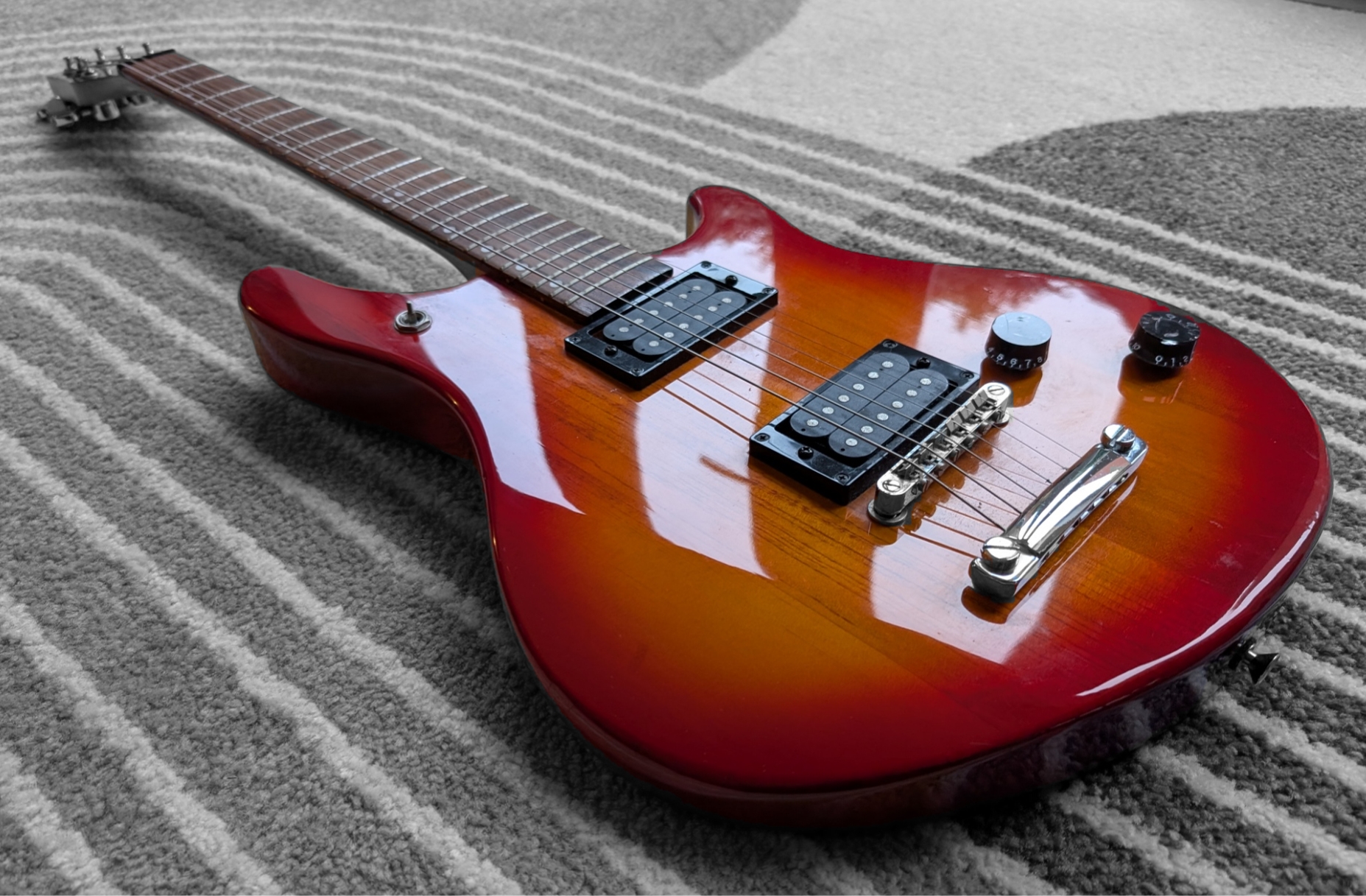
Being Your Own Guitar Tech
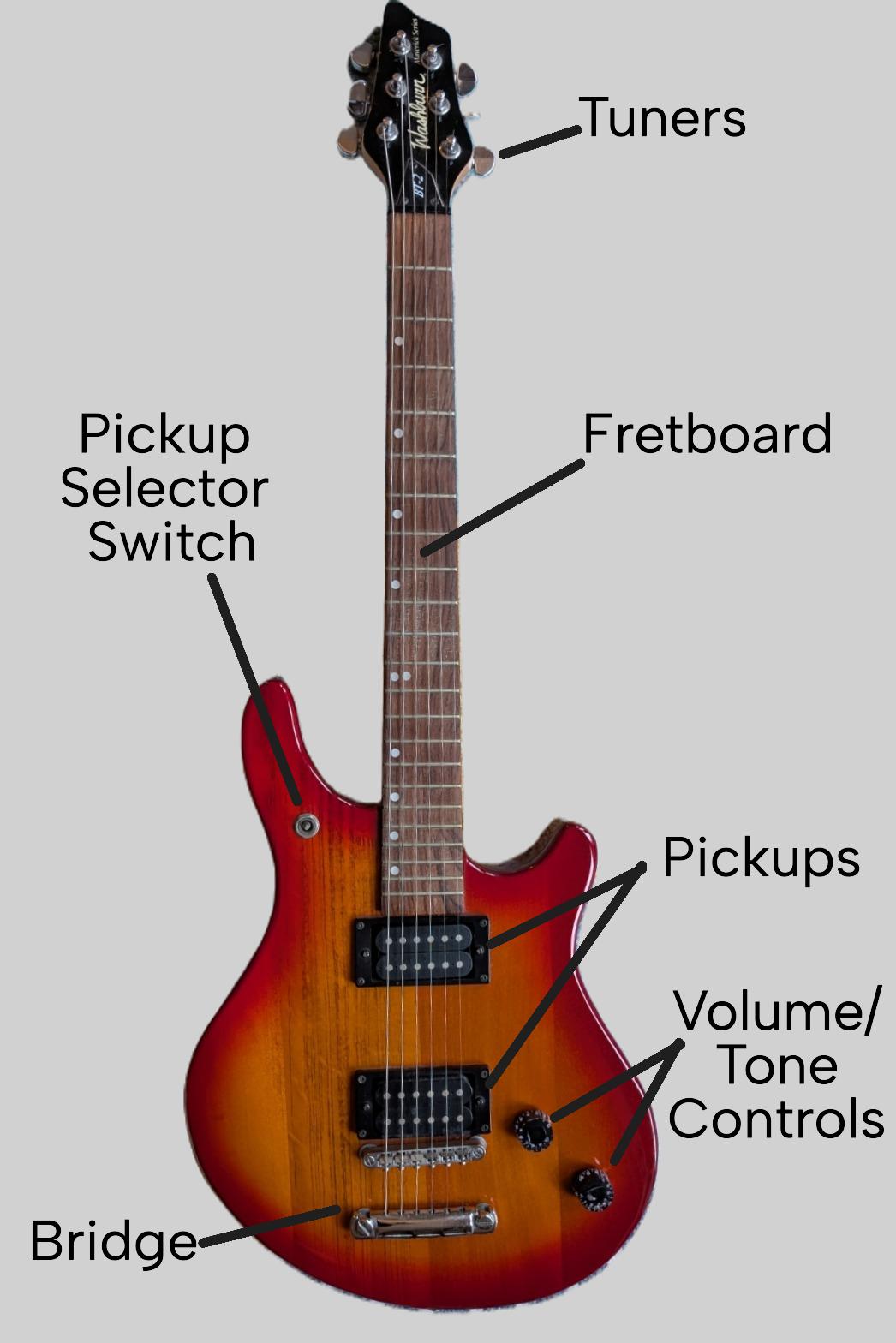
When you first get your brand new guitar, it is unlikely to be set up to play well unless you get it from a reputable guitar shop which should set it up for you before handing it over. While it may be tempting to get an expert to tweak your brand new pride and joy, taking the time to learn how to set up a guitar as you would like it, or diagnose and fix any little niggling issues is time well spent and rewarding.
Whilst much of the arrangement of an electric guitar are fixed at design by the manufacturer, considerable scope for adjustment remains. These adjustments may seem daunting to the beginner, but with a little knowledge and experimentation you can be well on your way to being able to being your own guitar tech. You will be surprised at how much improvement in playability of a guitar can be achieved from a properly set up guitar, and how easy it is to keep it in top playing shape despite any changes in temperature, humidity, handling and maybe a change in string gauges.
Before we get into the nitty gritty a few notes to bear in mind:
- Whilst all guitars are fundamentally similar, any given brand or model will have its own nuances. This guide should be considered a supplemental addition to any manufacturer information. I refer to metric based setup parameters, but I’ll put inches in brackets afterwards. If your guitar manufacturer specifies different parameters, these should be adhered to instead.
- Always make adjustments at room temperature and keep the instrument at the correct tuning throughout the setup process.
- Setup starts with the truss rod, followed by the bridge, the intonation and finally the pickup height, find a flat surface to work on with good lighting, lay down a towel to prevent scuffing/scratching, a couple of thick books should support the neck to stop any unintended re-tunes whilst laying the guitar flat! Allow about an hour for the first setup, any re-visits should go a bit quicker.
- For best results any measurements should be taken in the upright position to avoid any influence from gravity.
- Any setup specifications I have provided are really just a starting point. For example, some players prefer a flatter neck and will try to set it as flat as possible without any fret buzz, others may want extremely low action at a specific part of the neck and might use a combination of setups to achieve that goal. Once you become more familiar with setting up the guitar, feel free to experiment, always make small adjustments at a time to achieve the setup you desire.
- Locking tremolos are out of the scope of this particular guide. I have written about how to change strings and set up a locking tremolo here. If you have a locking tremolo on your guitar I suggest you read this and then come back to this guide and pick it up again at Step 1, nearing in mind the differences for your guitar.
Changing Strings
The ideal time to undertake a complete setup is following the installation of a new set of strings, please refer to this guide for a tutorial in changing strings. If you have a locking tremolo system on your guitar, try this guide instead.
Tools
Usually the correct allen(hex) keys should be supplied with your guitar for truss rod, intonation and string clamps. depending on the model of your guitar a flat or phillips head screwdriver may be required for some adjustments. In addition to these a feeler gauge, capo and guitar tuner is also required. If your short of any of these items please look at the recommended kit page where a decent guitar toolkit is highlighted.
Step 1: The Truss Rod
No other adjustment strikes fear into the heart of would be guitar tinkerers than the truss rod, this adjustment is thought to be able to destroy your guitar with one ill thought out tweak!
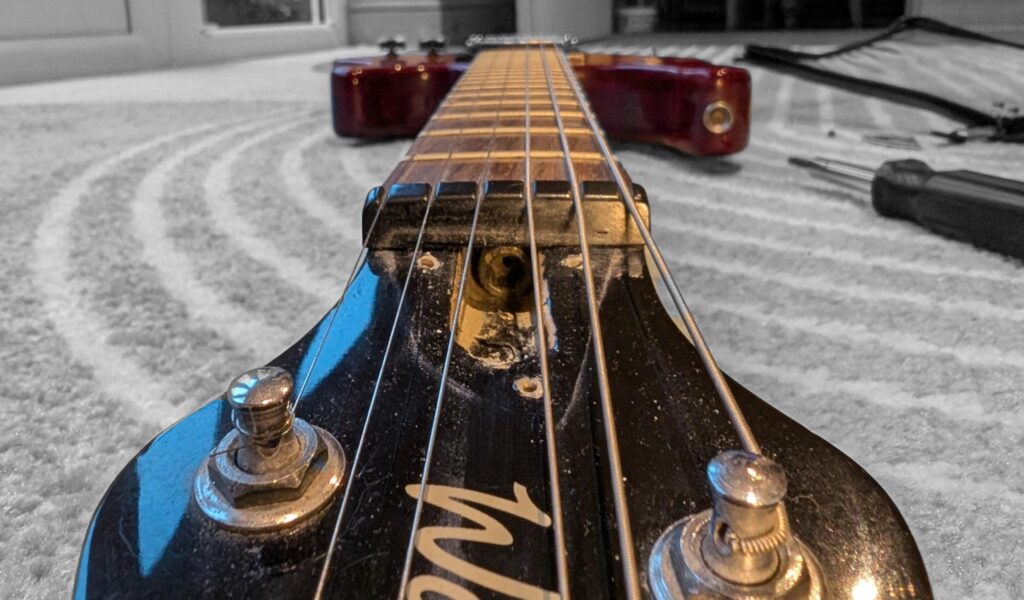
Whilst it is certainly true that you can damage your guitar, taking the time to understand the purpose of the truss rod and making small adjustments, with purpose, should help alleviate any anxiety.
Imagine the guitar lying flat on a surface, the strings act on the guitar neck to create a slight upward bow, this is desirable within a certain range but can cause playability issues if it is excessive.
To counteract the action of the strings on the guitar, manufacturers install the truss rod inside the neck with a nut at one end. Tightening the bolt i.e. turning it clockwise makes the neck more resistant to the action of the strings and flattens the neck. Loosening the bolt on the truss rod i.e. turning the bolt counter clockwise has the opposite effect, allowing the strings to bow the neck more. Only make small adjustments to the truss rod should be made at a time!
It’s worth noting that the truss rod adjustment point is most commonly located at the top of the neck, sometimes covered by a piece of plastic near the nut of the guitar or, more annoyingly, at the other end where the neck meets the body. In this case you have to loosen the strings, sometimes you may even have to take out the pickup near the neck to get to the truss rod any time you need to adjust it!
Since the neck is made of wood, it won’t immediately be obvious that anything has changed if you make an adjustment to the truss rod tension. It is advisable to wait between adjustments; I generally allow 10-15 minutes between adjustments allowing things to settle before deciding if a further tweak is needed.
My preferred way to ascertain if adjustment is needed is to measure! The tools you need for this are:
- A Capo
- A Feeler Gauge
The technique is as follows:
- Attach the capo to the 1st fret,
- Depress the highest fret of the lower E string (the thickest one!).
- Find the midway fret between the capo and your finger on the highest fret (usually the 8th fret).
- Measure the clearance between the midway fret and the string.
- A good starting gap to aim for is 0.25mm (0.010”).
- If the string height is more than this this, the strings are winning, and the truss rod should be tightened (turn the nut clockwise).
- If the string height is less than this, the neck is winning, and the truss rod should be loosened (turn the truss rod nut counter clockwise).
- Make small adjustments, no more than a quarter turn at a time. Leave for 15 minutes, check the tuning and repeat from step 5 again until you are satisfied.
- Truss rod adjustments may require some force but if you sense abnormal resistance, take it to a professional for assessment.
Step 2: Action
Action refers to the height of the string above the fretboard. The higher the action (higher the string is away from the fretboard, the harder it is to play as you require more hand strength to fret the note on any particular string. Conversely, the lower the action (the closer the string is to the fretboard), the more likely the instrument is to suffer from fret buzz, that annoying buzzing sound when a note is fretted, but due to the curvature of the neck, the string may catch on a fret higher up the fretboard.
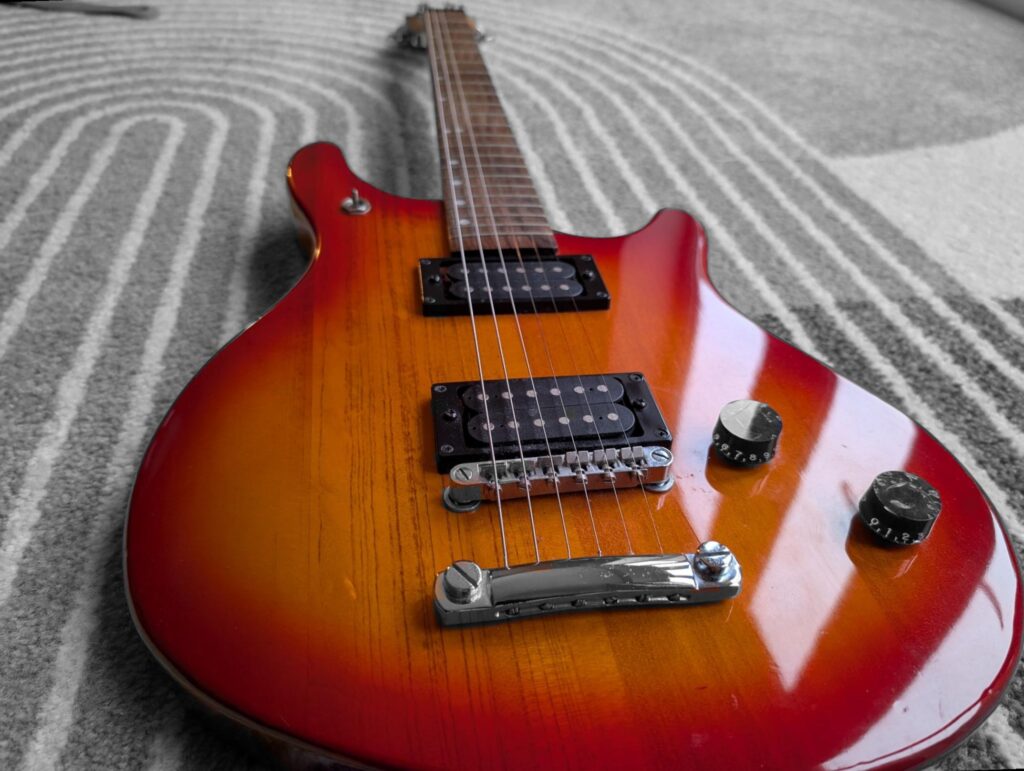
Setting up the action is a compromise or balance of getting the string height just right so that the string is as low as possible for playability, but not so low as to cause fret buzz. The action is generally altered at the bridge. There are a few different styles of bridge that offer different arrangements for increasing /decreasing the action height.
Most commonly, the action is adjusted by two saddle screws at either side of the bridge.
To check the action, measure the height of the string height with a ruler balanced on the fret itself at the 17th fret and adjust the string height to about 2mm (5/64″) above the fretboard using the bridge adjustments particular to your type of guitar. Work in small increments of 1/4 -1/2 turns. A clockwise turn will lower the height and a counter clockwise turn will raise the height of the strings. Make equal turns on both sides of the bridge to keep it roughly level although the thinner strings don’t move as much so the action can be set slightly lower on that side without running into buzzing issues.
The action of the guitar can be set to a wide range of preferences, some guitarists prefer a low action so they can perform lighting quick solos and may even tolerate a certain amount of fret buzz to achieve it, others prefer a higher action. Use the height provided as a start and experiment to see which you prefer.
Now is a good time to check the height of the strings at the nut of the guitar, this can be a good test as, even if set up correctly, if there is a problem with the nut, there may be issues. the height of the string at the first fret should be above 0.5mm (0.020″), if it isn’t, this may indicate wear at the nut and it may require replacement, which is beyond the scope of this guide. A quick dirty temporary fix would be to pack the offending string slot by placing a shim under the string, a sturdy piece of card might work.
Step 3: Intonation
Intonation, simply put, is how in tune your guitar is along the fretboard. for example, if you were to play an open low E string (thickest string) and then play 12th fret of the same E string you are playing the note E an octave higher. Both notes should be an E, and if they are not there is an issue with intonation.
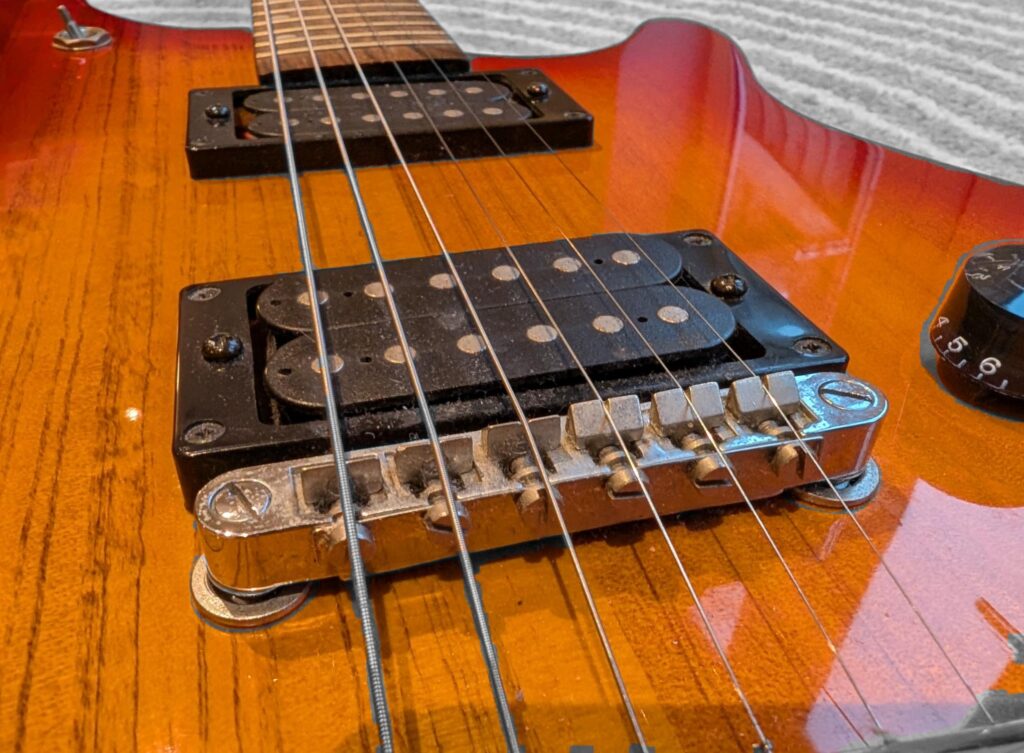
As can be seen in the photo above, there is a screw associated with each string, each type of bridge usually has a similar arrangement. Each screw can be adjusted to lengthen or shorten the playable length of the string.
The use of a tuner is recommended for this part of the setup, simply turn on the tuner, and start on the lowest string. Play an open note and then fret the 12th note of the same string and pluck. Note the difference between the notes. If the fretted note is sharp (higher), tighten the screw which lengthens the string, if the note is flat (lower) loosen the screw which shortens the string. After adjustment try the test again and adjust until the open note and fretted note are the same. Repeat this sequence for each string until all your strings are correctly intonated. It is common for all the strings to be at different lengths when correctly intonated. I’ve no idea why this is!
Step 4: Adjust Pickup Height
A guitar pickup works via the metal strings vibrating within a magnetic field produced by the pickups on the guitar, this produces a small alternating electric current, which is sent out via your guitar lead to an amplifier, which then replicates the sound of your guitar string being played.
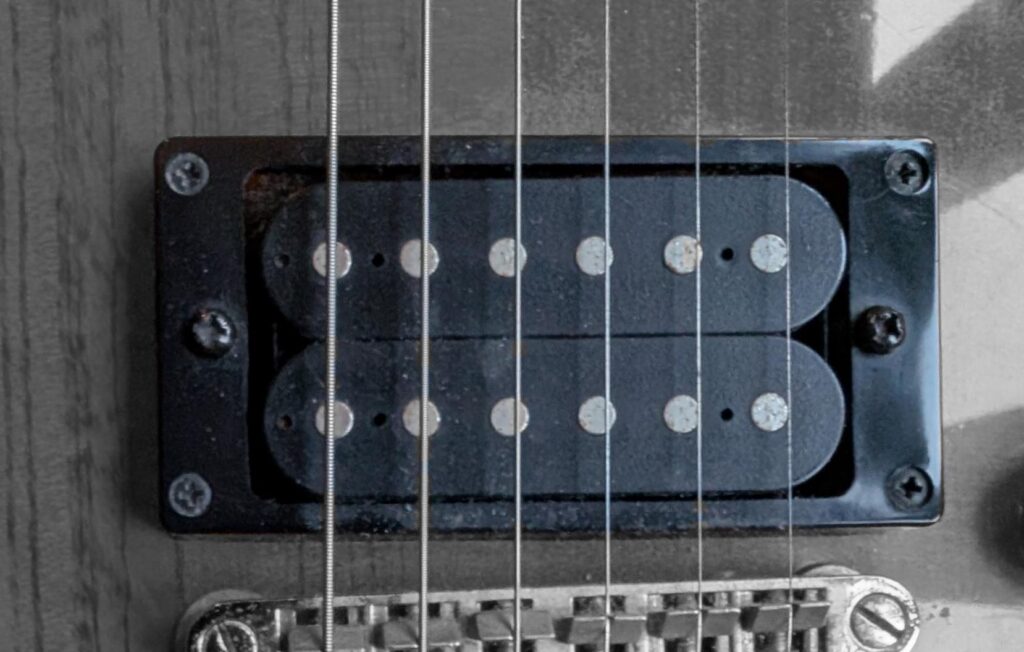
The pickup height can be adjusted, usually via the two screws on either side. turning the screw clockwise will raise the height of the pickup, turning it counter clockwise will lower the height of the pickup.
A good starting point is for a clearance of 1.5mm (1/16″) between the pickup and the high E string (thinnest string) and 2mm (still generally rounded to 1/16″) at the low E (thickest) string. Generally speaking, the closer the pickup to the string, the louder it will be, the lower it is, the quieter and more mellow it will sound.
If your guitar has more than one pickup, try and get them to the same height and then adjust as necessary so they are about the same volume.
Final Thoughts
With this final adjustment, the setup is complete. Now all you have to do is learn to play the thing, which is a whole other journey!
I hope this guide is useful, if you have any ideas about subjects for beginners you would like to see me writing about, please leave a comment below or send me an email via the contacts page.